Maybe not a discovery, as I doubt I'm the first in the history of hackdom to happen upon this phenomonon.
But before I get ahead of myself here, this all started with me making a cigar box instrument with some left over bits & pieces.
I've made many over the years as a hobby and a sideline to pedal at craft fairs. They also make unusual and bitchen' gifts.
So I was making a resonator type instrument using a gallon tin can bottom for the resonator itself.
I've made a few of these before. Unplugged they sound like a banjo on acid.
This is what they generally look like....
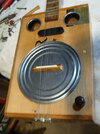
You'll notice that it has a magnetic pickup.
It works that way, it pickups the vibrations of the strings in proper fashion, but looses the rasp and bite of that scientifically designed resonator in the process.
In other words, plugged in it sounds like any other cigar box guitar with a mag pickup.
I've tried a few ways to get more snarl and sass. I've epoxied piezo discs directly to the underside of the resonator.
It was closer, it picked up the rasp, but had the annoying piezo tone and was painfully bright.
Due to the odd impedance of the piezo, a tone pot is useless.
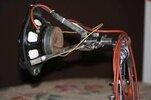
So today I was testing a donor single coil for the project at hand, and had it connected direct to the amp via clip on jumper wires.
It was connected and on when I picked up the can bottom.
As soon as the can came in close proximity to the pickup, the can bottom turned microphonic...
So like an excited kid I started tapping on the can bottom with different objects while moving the pickup around.
Even sticking the poles directly to the can, and the sounds were getting encouraging.
Several beers later I found a happy distance @ 3/16" for the air gap between the pickup and the can bottom for the raspiest and raunchiest tone.
This was getting interesting for me as now I had a way to bring out the banjoish character & sassy rude tone amplified.
So now it sounds like a banjo on acid thru a ring modulator plugged in.
A very metallic sound with clanking overtones.
A huge plus is that the pickup is now hidden under the "resonator".
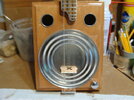
Much cleaner look.
Anyway, the whole reason of this rambling post is to ask if anyone knew exactly how this works?
A magnetic pickup is mounted 3/16" away, underneath a thin steel can bottom.
The strings are a full inch over the can bottom,
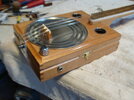
So the pickup isn't picking up the strings in a way we normally think of. It's picking up the can bottom.
The whole surface of the can bottom is alive. It pickups up the rasp of the steel resonator along with the sound of the strings.
Tapping on the surface also produces different tones.
Oh, it also feeds back like a banshee when gained up.
Touching the can bottom squelches it, like touching the soundboard on an acoustic guitar when it feeds back.
The tailpiece is grounded to the back of the volume pot as per common sense, as well as the can bottom resonator for good measure.
So how does the pickup manage to couple with the can, to make what in effect seems to be a crude microphone?
Inquiring minds want to know.
This seems to be what's happening. Am I on the right track?
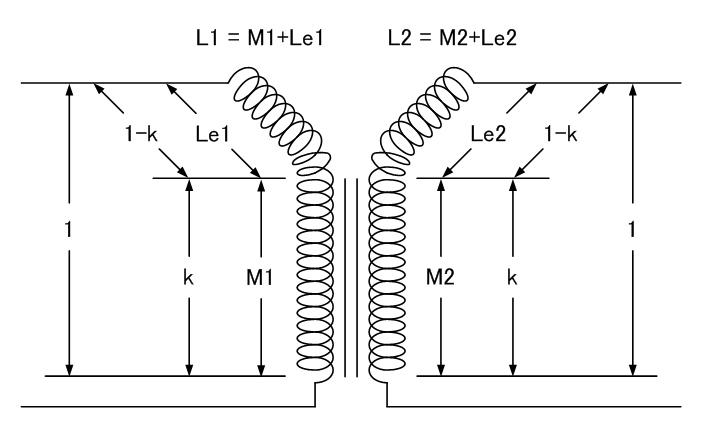
 en.wikipedia.org
.
en.wikipedia.org
.
But before I get ahead of myself here, this all started with me making a cigar box instrument with some left over bits & pieces.
I've made many over the years as a hobby and a sideline to pedal at craft fairs. They also make unusual and bitchen' gifts.
So I was making a resonator type instrument using a gallon tin can bottom for the resonator itself.
I've made a few of these before. Unplugged they sound like a banjo on acid.
This is what they generally look like....
You'll notice that it has a magnetic pickup.
It works that way, it pickups the vibrations of the strings in proper fashion, but looses the rasp and bite of that scientifically designed resonator in the process.
In other words, plugged in it sounds like any other cigar box guitar with a mag pickup.
I've tried a few ways to get more snarl and sass. I've epoxied piezo discs directly to the underside of the resonator.
It was closer, it picked up the rasp, but had the annoying piezo tone and was painfully bright.
Due to the odd impedance of the piezo, a tone pot is useless.
So today I was testing a donor single coil for the project at hand, and had it connected direct to the amp via clip on jumper wires.
It was connected and on when I picked up the can bottom.
As soon as the can came in close proximity to the pickup, the can bottom turned microphonic...
So like an excited kid I started tapping on the can bottom with different objects while moving the pickup around.
Even sticking the poles directly to the can, and the sounds were getting encouraging.
Several beers later I found a happy distance @ 3/16" for the air gap between the pickup and the can bottom for the raspiest and raunchiest tone.
This was getting interesting for me as now I had a way to bring out the banjoish character & sassy rude tone amplified.
So now it sounds like a banjo on acid thru a ring modulator plugged in.
A very metallic sound with clanking overtones.
A huge plus is that the pickup is now hidden under the "resonator".
Much cleaner look.
Anyway, the whole reason of this rambling post is to ask if anyone knew exactly how this works?
A magnetic pickup is mounted 3/16" away, underneath a thin steel can bottom.
The strings are a full inch over the can bottom,
So the pickup isn't picking up the strings in a way we normally think of. It's picking up the can bottom.
The whole surface of the can bottom is alive. It pickups up the rasp of the steel resonator along with the sound of the strings.
Tapping on the surface also produces different tones.
Oh, it also feeds back like a banshee when gained up.
Touching the can bottom squelches it, like touching the soundboard on an acoustic guitar when it feeds back.
The tailpiece is grounded to the back of the volume pot as per common sense, as well as the can bottom resonator for good measure.
So how does the pickup manage to couple with the can, to make what in effect seems to be a crude microphone?
Inquiring minds want to know.
This seems to be what's happening. Am I on the right track?
Inductive coupling - Wikipedia
en.wikipedia.org
Last edited:


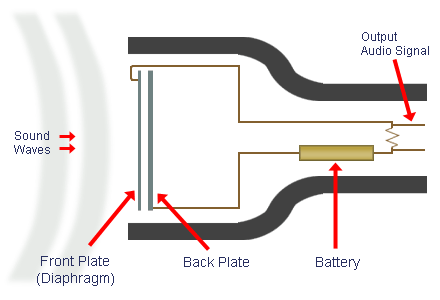
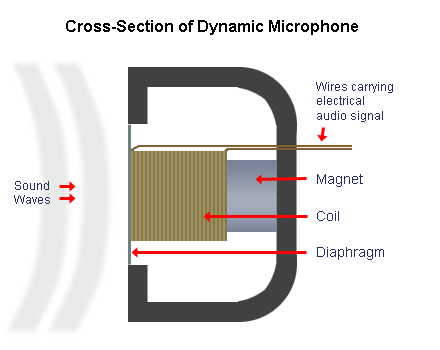

 .
.