You are using an out of date browser. It may not display this or other websites correctly.
You should upgrade or use an alternative browser.
You should upgrade or use an alternative browser.
Harmony............ series 6 AMPS?!?!?!
- Thread starter eSGEe
- Start date

Clockworkmike
Ambassador of STACKS in WV SHACKS

First guitar i ever held was a cheap Harmony classical that my brother got from my grandma at a Big Lots in 1991 i think lol so i gotta weird connection to them, as id sneak off and try to "play" it but just banged around on it. Nothing has changed in 30 years: still cant play lol


Amp Mad Scientist
Ambassador of Heresy
Built to be Heard
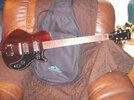
my first "real" electric was a harmony
View attachment 72559
Might be time to revisit my beginnings?
Does it strike you as strange that there wasn't a single note, from any of the amps / players in this entire video?
Clockworkmike
Ambassador of STACKS in WV SHACKS
That is a painfully valid point lol if you're gonna sell an amp via a video: show what the amp can do in a demoBuilt to be Heard
Does it strike you as strange that there wasn't a single note, from any of the amps / players in this entire video?
Amp Mad Scientist
Ambassador of Heresy
Here's the actual sound from the amps in the video:That is a painfully valid point lol if you're gonna sell an amp via a video: show what the amp can do in a demo

SIx String Chef
Ambassador of Taste

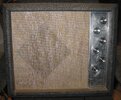
They've been making amps for a long time now... I have a vintage one (60's, I think) : H311C. Basically their version of a Fender Deluxe Reverb
All GE NOS old timey tubes, GZ34 rectifier. About 20W and a very decent reverb. Tremolo is OK, could have more definition though.
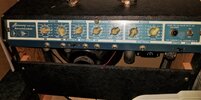
If the new ones sound even in the neighborhood of this one, then they are OK. Although I have to say that whoever's running the company these days, seems to know jack about the vintage ones.
A few months ago I called them to see if I could get some of the original documents, schematics, even an owners manual on PDF or so... After 20 minutes on the phone, the kid at the other end just admitted he had no idea what model I was talking about and that I would be better just looking it up on the 'net. Pfft! Good thing the schematic is glued to the inside bottom of the amp. I'll take a full picture of it later.
All GE NOS old timey tubes, GZ34 rectifier. About 20W and a very decent reverb. Tremolo is OK, could have more definition though.
If the new ones sound even in the neighborhood of this one, then they are OK. Although I have to say that whoever's running the company these days, seems to know jack
about the vintage ones.A few months ago I called them to see if I could get some of the original documents, schematics, even an owners manual on PDF or so... After 20 minutes on the phone, the kid at the other end just admitted he had no idea what model I was talking about and that I would be better just looking it up on the 'net. Pfft! Good thing the schematic is glued to the inside bottom of the amp. I'll take a full picture of it later.
Last edited:
Pissed Plexi
Well-Known Member
I started with a Harmony SS amp. intercourse stinker machine. However I thought farts were cool. So I kept playing.
I'm leaving the spell correction.
I'm leaving the spell correction.

gball
Ambassador of Boogie
Im guessing anyone that was involved with the vitnage ones is no longer with the companyu--- Heck might be in "{name" only ???
sounds like an amp....
I don't know who this Fredrik Halland kid is, but damn he can play his ass off.

Cadorman
Ambassador of the Catocaster

Mojotone Custom 50 Guitar Tube Amp Kit
The design was a labor of love that started in a garage in New Malden, England. It quickly grew in local popularity, and made its way to the stage behind big names like the Who, Pink Floyd, Jethro Tull, the Moody Blues, and Manfred Mann. The legendary DR504 is synonymous with big, clean, and...
 www.mojotone.com
But why when you could have this?
OP

eSGEe
Ferengi Ambassador of Trade
he has been doing that for awhile.....................I don't know who this Fredrik Halland kid is, but damn he can play his ass off.
Amp Mad Scientist
Ambassador of Heresy
You might have guessed that the new Harmony amps are not the same and not built by the same company in USA.They've been making amps for a long time now... I have a vintage one (60's, I think) : H311C. Basically their version of a Fender Deluxe Reverb
All GE NOS old timey tubes, GZ34 rectifier. About 20W and a very decent reverb. Tremolo is OK, could have more definition though.
View attachment 72573
If the new ones sound even in the neighborhood of this one, then they are OK. Although I have to say that whoever's running the company these days, seems to know jack
A few months ago I called them to see if I could get some of the original documents, schematics, even an owners manual on PDF or so... After 20 minutes on the phone, the kid at the other end just admitted he had no idea what model I was talking about and that I would be better just looking it up on the 'net. Pfft! Good thing the schematic is glued to the inside bottom of the amp. I'll take a full picture of it later.
I'm thinking they are built at the crate factory in China...
But a schematic inside was the norm on most tube equipment of the day. TVs Radios almost everything had schematics pasted inside.
Harmony was founded in 1892 by Wilhelm Schultz. In 1916, Sears, Roebuck and Co. purchased it, in part to corner the ukulele market. At the time Harmony was led by Joe Kraus, who was chairman until 1940.[2]
In 1928, Harmony introduced the first of many Roy Smeck models, and went on to become the largest producer in the U.S. They sold 250,000 pieces in 1923 and 500,000 in 1930, including various models of guitars, banjos, and mandolins.
In the late 1930s, the firm began making violins again after a 19-year hiatus. They also bought brand names from the bankrupt Oscar Schmidt Co.—La Scala, Stella, and Sovereign. They sold not only Harmony products, but instruments under the Sears name, Silvertone, and a variety of trade names—Vogue, Valencia, Johnny Marvin, Monterey, Stella, and others.[citation needed] In 1940, after Kraus had a conflict with management, he left, but then bought enough stock to restart the company independently.[2]
Between 1945 and 1975, the Chicago firm mass-produced about ten million guitars. The company reduced their output over the years, later focusing on student models sold through JCPenney. The Harmony brand peaked in 1964-1965, selling 350,000 instruments, but low-end foreign competition led to the company's demise 10 years later.
The pickups on almost all electric guitars and basses that Harmony produced were manufactured by Rowe Industries Inc. (later known as H.N. Rowe & Company, Rowe DeArmond Inc., and DeArmond Inc.) of Toledo, Ohio. Many of the instrument amplifiers badged with the Harmony name were manufactured by "Sound Projects Company" of Cicero, Illinois.[3]
The Harmony Guitar Company ceased in 1975,[4] and sold the Harmony name. In the early 2000s, an unrelated company, the Westheimer Corp., based in Lake Barrington, Illinois briefly imported "reissue" Harmony guitars.
In 2018, BandLab Technologies claimed to be "relaunching" the Harmony brand with a new series of electric guitars and guitar amps.[5][6] The brand has since been relaunched with American-made models such as the Rebel and the Jupiter. [7]
BandLab Technologies is a Singapore-based company that operates a social music platform, called BandLab, and also owns a variety of music-related brands. These include Harmony and Heritage Guitars; the Guitar.com, NME, Uncut and MusicTech.net media platforms; and the Swee Lee musical instrument retailer and distributor.[1]
Last edited:
SIx String Chef
Ambassador of Taste
Yes, that makes absolute sense... I guess they "inherited" the brand and prestige that comes with it by buying it, as has happened to most old-school brands of everything.You might have guessed that the new Harmony amps are not the same and not built by the same company in USA.
I'm thinking they are built at the crate factory in China...
But a schematic inside was the norm on most tube equipment of the day. TVs Radios almost everything had schematics pasted inside.
I DO remember seeing a schematics blueprint inside a Philips B&W TV that we had at home back in the day (try 50-something years ago) when my dad took it once to the TV repair shop. Also inside a huge multiband (AM and a few SW bands, no FM) radio wooden "cabinet/console" (also philips, I think. Maybe Stromberg Carlson, not too sure) at my grandma's that had a vinyl record player and integrated speaker(s?), 78, 45 and 33-1/3 rpm... Both had to warm up before sound/images came up. I loved how the image collapsed into a little dot on the screen when it turned off. And the smell: warm, old-timey, totally analog, non-ss tube electronics, wood and sometimes a little bakelite... so many memories!
I think I'll open up the amp today and take some pictures of the schematics...
SIx String Chef
Ambassador of Taste
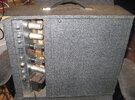
As promised in my post above, I took some pictures of the insides of my HR H311C vintage tube amp, including the schematic glued to the bottom of the cab. Here they are:
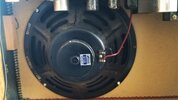
Old school Jensen 8-ohm 12" speaker. It also has a nice spring reverb tank, I'll post pictures of that later.
The schematic is a little stained, but still legible. I'll take better pictures, but in the meantime, here goes the workings of thos wee'un. 20 amp, as I understand it, it's Harmony's take on the reverb deluxe, tremolo and all.
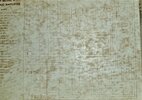
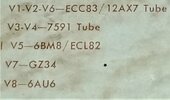
And this is the list of the tubes, taken from the schematic's list of components.
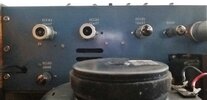
And here is the inside view from underneath of the chassis layout
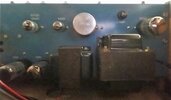
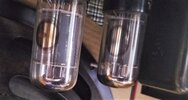
Now here's a question for the amp tubemeister gurus: I'm a newbie about anything related with tube amp electronics so, any piece of knowledge is greatly appreciated... would I be right to assume that the silver round patches on the sides of the 7591s are a normal part of these? Or should I start worrying?
So there you go, an intimate view to the insides of my Harmony H311C. As I mentioned, I'll take better pictures of the full schematic and components list, and post them later.
I really like the sound of this amp, although I have to say that I find the tremolo a lacking definition... But maybe I can fix that.
Anyway, enjoy!
Old school Jensen 8-ohm 12" speaker. It also has a nice spring reverb tank, I'll post pictures of that later.
The schematic is a little stained, but still legible. I'll take better pictures, but in the meantime, here goes the workings of thos wee'un. 20 amp, as I understand it, it's Harmony's take on the reverb deluxe, tremolo and all.
And this is the list of the tubes, taken from the schematic's list of components.
And here is the inside view from underneath of the chassis layout
Now here's a question for the amp tubemeister gurus: I'm a newbie about anything related with tube amp electronics so, any piece of knowledge is greatly appreciated... would I be right to assume that the silver round patches on the sides of the 7591s are a normal part of these? Or should I start worrying?
So there you go, an intimate view to the insides of my Harmony H311C. As I mentioned, I'll take better pictures of the full schematic and components list, and post them later.
I really like the sound of this amp, although I have to say that I find the tremolo a lacking definition... But maybe I can fix that.
Anyway, enjoy!

Amp Mad Scientist
Ambassador of Heresy
Well, maybe you can rewire it for another type of tube....As promised in my post above, I took some pictures of the insides of my HR H311C vintage tube amp, including the schematic glued to the bottom of the cab. Here they are:
View attachment 72930
Old school Jensen 8-ohm 12" speaker. It also has a nice spring reverb tank, I'll post pictures of that later.
The schematic is a little stained, but still legible. I'll take better pictures, but in the meantime, here goes the workings of thos wee'un. 20 amp, as I understand it, it's Harmony's take on the reverb deluxe, tremolo and all.
View attachment 72931
And this is the list of the tubes, taken from the schematic's list of components.
View attachment 72932
And here is the inside view from underneath of the chassis layout
View attachment 72934
View attachment 72935
Now here's a question for the amp tubemeister gurus: I'm a newbie about anything related with tube amp electronics so, any piece of knowledge is greatly appreciated... would I be right to assume that the silver round patches on the sides of the 7591s are a normal part of these? Or should I start worrying?
View attachment 72933
So there you go, an intimate view to the insides of my Harmony H311C. As I mentioned, I'll take better pictures of the full schematic and components list, and post them later.
I really like the sound of this amp, although I have to say that I find the tremolo a lacking definition... But maybe I can fix that.
Anyway, enjoy!
6AU6 and 7591 are going to be scarce.
Although 7591 was a pretty cool tube.
6AU6 was pretty popular until 12AX7 came along.
Even Dynaco Hi Fi amps used 7591, which shows to goya it wasn't a bad audio preamp.
I think one reason was that 12A_7 could run on 6 or 12 volt filaments, and it was more efficient gain-wise requiring less preamp stages...compared to 6AU6.
But you can certainly find similar NOS substitutions for 7591 and 6AU6 that plug into the stock socket.
Last edited:
SIx String Chef
Ambassador of Taste
And any substitution of that kind you mention should not noticeably affect the amp's performance (mainly tone), correct?But you can certainly find similar NOS substitutions for 7591 and 6AU6 that plug into the stock socket.

ivan H
Ambassador of Tubes & Grooves

The 7591 is no problem, they are in current production, JJ, EHX that I know of off the top of my head. The 6AU6 pentode was good for many applications & along with its "equivalents" was very widely used, so finding NOS/NIB shouldn't be too much of a problem or too costly. Cheers.
Edit:
Here's a Russian equivalent for 2 bucks.
 tubes-store.com
Cheers
tubes-store.com
Cheers
Edit:
Here's a Russian equivalent for 2 bucks.
Tubes-Store.com → Other tubes → 6J4P / EF94 / 6AU6 tube
Russian 6J4P pentode tube. Equivalent to the 6AU6 / EF94. <p> <li>Name: 6J4P <li>Type: HF pentode <li>Application: HF voltage amplification <li>Cathode type: oxide, indirect heating <li>Envelope: glass, miniature <li>Mass, g: 13 <li>Filament voltage, V: 6,3 <li>Filament current, A: 0,275-0,325...
tubes-store.com
Last edited: