Question About The EH Nano Reverb...

guitarweasel

Ambassador of Groovy Gear
Fallen Star
Country flag
My Electro Harmonix Holy Grail Nano sounds great through an EF Loop, but when it's run directly into the front end of the amp, even with the reverb amount turned totally counter clock wise, it's still over whelming.

Is there a trim pot in this thing? I haven't opened it up yet to look, generally most of the digital pedals I've run across don't.

Any suggestions?
 
All the video demos of this pedal that I have seen, never shows this type of problem. Whether in front of the amp or thru an fx loop. No mention of an internal trimpot either. Doesn't mean that something has not gone wrong with your pedal.

Is there a lot of boosting of the guitars signal before it reaches the pedal? Lots of amp gain?
 
I'm using a Bogner 20th Anniversary Shiva, it has a ton of gain, but it has a beautiful clean channel, there's no boost going to the pedals and even in the clean channel straight into the front end of the amp, it's very overwhelming, but fine through the EFX Loop. Even on my old school single channel non master volume amps it does the same thing.
 
Can you A-B it to another one? The way you describe the performance on yours, sure doesn't sound right when compared to the demos.

What are you powering it with?

https://www.ehx.com/assets/instructions/holy-grail.pdf
"WARNING: Use only the 9.6DC-200mA adapter the Holy Grail comes supplied with. Do not use any other DC adapters. Using other DC adapters, even those made by Electro-Harmonix, could cause harm to the unit, the adapter or you. The Holy Grail does not use batteries. " This is also the same power supply used by BOSS
 
Last edited:
That is different than my old school Holy GRail I notice the knob is very Sensitive compared to other reverb pedals I have tried--- but I really like it
153319000000000-00-500x500.jpg
 
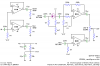
You could maybe use a "blend" circuit to split & then blend the wet/dry signal. I don't know if you're into DIY electronics, but this simple "splitter blender" circuit from runoffgroove.com would be ideal C__Data_Users_DefApps_AppData_INTERNETEXPLORER_Temp_Saved Images_images(21).png
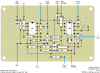
Here's the point to point (prototype board) layout for it. C__Data_Users_DefApps_AppData_INTERNETEXPLORER_Temp_Saved Images_sb-perf(1).png
There's a description on the runoffgroove site titled "Splitter Blend Dual Parallel Effect Loops". The circuit incorporates a "phase" switch so can handle pedals that invert the signal. Hope this can be of help. Cheers
 
Last edited:
  • Like
Reactions: RVA
You could maybe use a "blend" circuit to split & then blend the wet/dry signal. I don't know if you're into DIY electronics, but this simple "splitter blender" circuit from runoffgroove.com would be ideal View attachment 16091
Here's the point to point (prototype board) layout for it. View attachment 16092
There's a description on the runoffgroove site titled "Splitter Blend Dual Parallel Effect Loops". The circuit incorporates a "phase" switch so can handle pedals that invert the signal. Hope this can be of help. Cheers
Ivan, do you sell your home builds?
 
Ivan, do you sell your home builds?

I occasionally make them for other people, but mostly just kinda "long term lend" them to friends. When I have done them for someone else I drill out the enclosure then give it to them to add their own graphics & labelling etc, as I don't do that, then when they're done I put the electronics in for them. I haven't done any for a while as I moved interstate 6 months ago & don't have a local electronics outlet any more, online only, but time allowing, I could still build if someone needed something. Cheers
 
  • Like
Reactions: RVA
I occasionally make them for other people, but mostly just kinda "long term lend" them to friends. When I have done them for someone else I drill out the enclosure then give it to them to add their own graphics & labelling etc, as I don't do that, then when they're done I put the electronics in for them. I haven't done any for a while as I moved interstate 6 months ago & don't have a local electronics outlet any more, online only, but time allowing, I could still build if someone needed something. Cheers

Need is a strong word. Some people (identity currently classified - OK, me) want a Prince of Tone Clone
 
Need is a strong word. Some people (identity currently classified - OK, me) want a Prince of Tone Clone

Ok, firstly, apologize for totally derailly your thread @guitarweasel.
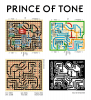
Well, here is a perfboard (aka prototype board) layout for the Prince Of Tone
C__Data_Users_DefApps_AppData_INTERNETEXPLORER_Temp_Saved Images_AnalogMan Prince of Tone.png
The two upper & the lower left diagrams all relate to a perfboard build, the lower right diagram is for a printed circuit board (printable from diagram), the upper right diagram being the component layout for it. I like doing perfboard builds where possible. Perfboard is exactly as shown in the upper & lower left diagrams. It has small copper foil pads on the underside of every hole. To build this way, the upper left diagram is showing the top, or component side of the board. The lower left diagram is showing the underside of the board, so is shown reversed (left to right) as if you had flipped the board over. What I usually do is use that (lower left diagram) to count out all the holes &, using a 1/8" drill bit in a hand chuck, remove all the un needed copper foil pads. Not really necessary, but makes the finished board (underside) much neater. Ok, where ever possible, the connections between components (on board underside) are made by inserting the component leads through the holes & then bending them to wherever needed to connect to other components. Otherwise, small pieces of copper wire is used where component leads cant. Ok, looking at the upper diagram, above the IC is a red box with 1 & 2 marked on it. These are DIP switches for selecting clipping options & its possible to mount them as a mini toggle on the enclosure. I think the rest is pretty self explanatory. If you think that maybe you'd like to get into DIY FX building, by all means have at it. Its something I encourage people to try their hand at. One doesn't have to understand electronics to build following these type diagrams. I would happily answer any questions, from making sure the correct components are ordered on through all aspects of putting together.
Otherwise, yes, given time I could throw it together. I must say though that in the last week I've started full time employment again, plus a hour each way travel each day (2 hours), so time is a little tight, though not overly. Cheers
 
Ok, firstly, apologize for totally derailly your thread @guitarweasel.
Well, here is a perfboard (aka prototype board) layout for the Prince Of Tone
View attachment 16094
The two upper & the lower left diagrams all relate to a perfboard build, the lower right diagram is for a printed circuit board (printable from diagram), the upper right diagram being the component layout for it. I like doing perfboard builds where possible. Perfboard is exactly as shown in the upper & lower left diagrams. It has small copper foil pads on the underside of every hole. To build this way, the upper left diagram is showing the top, or component side of the board. The lower left diagram is showing the underside of the board, so is shown reversed (left to right) as if you had flipped the board over. What I usually do is use that (lower left diagram) to count out all the holes &, using a 1/8" drill bit in a hand chuck, remove all the un needed copper foil pads. Not really necessary, but makes the finished board (underside) much neater. Ok, where ever possible, the connections between components (on board underside) are made by inserting the component leads through the holes & then bending them to wherever needed to connect to other components. Otherwise, small pieces of copper wire is used where component leads cant. Ok, looking at the upper diagram, above the IC is a red box with 1 & 2 marked on it. These are DIP switches for selecting clipping options & its possible to mount them as a mini toggle on the enclosure. I think the rest is pretty self explanatory. If you think that maybe you'd like to get into DIY FX building, by all means have at it. Its something I encourage people to try their hand at. One doesn't have to understand electronics to build following these type diagrams. I would happily answer any questions, from making sure the correct components are ordered on through all aspects of putting together.
Otherwise, yes, given time I could throw it together. I must say though that in the last week I've started full time employment again, plus a hour each way travel each day (2 hours), so time is a little tight, though not overly. Cheers
Yes, my apologies to Guitar Weasel . And thank you Ivan. I am considering trying this
 
Cool, building ones own fx is a very rewarding endeavour. I will msg you to make sure the correct components are ordered & the build goes well. There are only a few points to be certain on. Welcome to the fx building community. Cheers
 
  • Like
Reactions: RVA
Cool, building ones own fx is a very rewarding endeavour. I will msg you to make sure the correct components are ordered & the build goes well. There are only a few points to be certain on. Welcome to the fx building community. Cheers
Thanks Ivan! Any guidance is appreciated. This could be a big can of worms we have just opened, but it is time!!
 
Is your Holy Grail Nano, new? Hey... say "nano-new" real fast as many times as you can, for as long as you can... :confused:

giphy.gif


Sounds like something is amiss with the pedal itself.
I have read it is preferable to run modulation through the FX loop if available anyway, which you say is fine.
Can you return it or get a replacement?
If not FX loop it is and dig it.
 
Back
Top