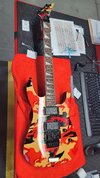
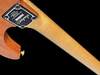
OP


Ahh…absolutely.
I just recalled you recently saying you would have to go through training and I was wondering if they went into this. Interesting content, nonetheless.
There has been a ton of information passed down through training, an incredible amount.
My role, at least for now, is final QC before a guitar leaves for a retailer.
I start with a visual inspection for finish anomalies, then a closer look to ensure frets/nuts/bridges are seated. I measure and confirm scale length, then check neck relief, action at 1st fret and 17th fret (14th acoustic) and pickup heights to ensure everything is within published specs.
The products that I'm seeing here are really good and I'm encountering surprisingly few issues that require a visit to the repair department or a return to the manufacturer.
Generally, I'm doing slight truss rod adjustments, cutting nut slots to bring 1st fret action into specifications and making sure the finish is pleasing.
In some cases, I'm buffing out overspray or light scratches on a buffing wheel, or with Jeweler's Rouge and a pad on a Dremel.
I was recently given a batch of 'FA' Series acoustics to examine. These are an entry level import-build for the most part and I really made them as nice as my inspection time would allow.
My rationale was, if I can give a first time Fender buyer an entry level guitar that's really playable and enjoyable, right out of the box, I can possibly make that person a "Fender Player" who will remember that experience and may later invest in a higher quality model.
Perhaps some would call this crazy, but the reality is, a lot of players will evaluate an entire guitar company on their experience with just ONE guitar, and many times, they make that evaluation on the most economical model offered by that firm.
For me, its a very personal thing. I take my role seriously because I've been the guy who had a brand new 2017 Gibson Les Paul with .140" action at the 12th fret because of a fretboard hump that should have never made it through QC.
When I look back on my frustrations with a total of (5) brand new Gibson purchases ($799.00/$999.00) between 2016 and 2018, I do my best to make sure that a Fender buyer isn't going to have that experience, regardless of whether it's an import or not.
I mean, yes, an entry level guitar is an economy model, but if it's setup correctly, and it plays well, then it's a win for everyone. A "good cheap guitar" is better than a more expensive model that needs a trip to a luthier - or a return label - before you can enjoy it.
We actually play these guitars as part of functional testing. I'm listening for buzzes or fret-outs. I'm also checking the last 7 frets on an acoustic - the ones you can't really reach - to be sure there's no dead spots.
All day long, you'll hear inspectors running scale patterns up and down the neck looking for problems.