eSGEe
Ferengi Ambassador of Trade



From this performer's point of view, the best amp is the one that sounds best at low levels
which are appropriate to use in a concert venue. The best amp is the one with an XLR out
on the back, so that the signal goes to the board for mixing properly with vocals and acoustic
instruments. In such a mix, the amp's onstage level is to be a stage monitor, no more...
>or maybe a little more, as any sound man will tell you. Our amp levels seem to increase...
dunno how that happens. When everyone tries to "cut through the mix," there is no mix and
the sound goes to hell.
Imho, the only time there is a mix is when everyone is trying NOT to cut through the mix, but
to take their place in the mix and play music together. When it's your turn for your solo, kick a
pedal or flip to yer dimed out bridge 'pup and let fly. After yer solo, you resume your place in
the mix.
People will disagree with me if they think that their amp's speaker tone is crucial to their individual sound.
All I'll say to that is that it's not about anyone's personal tone, it's about the song's tone, which
comes from the mix. Miking your amp might be the solution to this of course, to give your amp some headroom and to also give the soundman control over the mix. If you're going to mike your amp (for the sake of the song) then maybe you don't need a huge and heavy one. If you play loud enough to cause tube distortion with no pedals, you might not be able to be part of a mix. I actually never play like that, so I have no experience with mixing high gain sounds. *shrugs
But I HAVE heard a lot of bands that had everybody flailing away at distortion levels, and using pedals without regard for what their band mates might have running, and the singer was tearing up his throat at career ending levels, and the whole thing sounded like mush. That's what I associate huge powerful amps with. When something overdrives my eardrums, it sounds like
mush to me and I have to walk away. I like exciting music, but I have my limits. I learned this
the hard way, of course.


It may have been the most powerful but it wasn't the loudest.


From this performer's point of view, the best amp is the one that sounds best at low levels
which are appropriate to use in a concert venue. The best amp is the one with an XLR out
on the back, so that the signal goes to the board for mixing properly with vocals and acoustic
instruments. In such a mix, the amp's onstage level is to be a stage monitor, no more...
>or maybe a little more, as any sound man will tell you. Our amp levels seem to increase...
dunno how that happens. When everyone tries to "cut through the mix," there is no mix and
the sound goes to hell.
Imho, the only time there is a mix is when everyone is trying NOT to cut through the mix, but
to take their place in the mix and play music together. When it's your turn for your solo, kick a
pedal or flip to yer dimed out bridge 'pup and let fly. After yer solo, you resume your place in
the mix.
People will disagree with me if they think that their amp's speaker tone is crucial to their individual sound.
All I'll say to that is that it's not about anyone's personal tone, it's about the song's tone, which
comes from the mix. Miking your amp might be the solution to this of course, to give your amp some headroom and to also give the soundman control over the mix. If you're going to mike your amp (for the sake of the song) then maybe you don't need a huge and heavy one. If you play loud enough to cause tube distortion with no pedals, you might not be able to be part of a mix. I actually never play like that, so I have no experience with mixing high gain sounds. *shrugs
But I HAVE heard a lot of bands that had everybody flailing away at distortion levels, and using pedals without regard for what their band mates might have running, and the singer was tearing up his throat at career ending levels, and the whole thing sounded like mush. That's what I associate huge powerful amps with. When something overdrives my eardrums, it sounds like
mush to me and I have to walk away. I like exciting music, but I have my limits. I learned this
the hard way, of course.
View attachment 5461

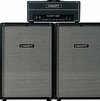
There has also been a 400 with 6 KT88.
...Bonamassa uses Plexiglas shields to control stage volume and try, to some degree, to control his penchant for unspotted pickups...
Unspotted?
I'm guessing you meant to type, "unpotted" and the device you're using autocorrected it to "unspotted"?
If not, what are these mysterious unspotted pickups of which you speak?
Do tell!