Amp tone and volume

It is not headroom. Almost all my amps are oversized. I am begining to think it is the speakers, the size of the room and my proximity to the amp. I imagine if I was on stage I'd and 15 feet away from the amp it would sound very different. Also, some of my cabs have speakers that do not have a lot to high volumes play time (just when the wife is out)
 
It is not headroom. Almost all my amps are oversized. I am begining to think it is the speakers, the size of the room and my proximity to the amp. I imagine if I was on stage I'd and 15 feet away from the amp it would sound very different. Also, some of my cabs have speakers that do not have a lot to high volumes play time (just when the wife is out)
Obviously there are a lot of variables that are going to affect an amp's sound production and what your ears hear at different volumes.
 
the rule #1..most important thing any guitar player should always do & don't touch it !! Just boost for a slight jump at leads.
This is all good info but it's kind of irrelevant in RVA's point of topic. He's not competing against a drummer or trying to be heard with a live band. He's experiencing different frequency responses and probably the old Fletcher Munson Curve effect on his hearing when increasing an amp's volume.
 
It is not headroom. Almost all my amps are oversized. I am beginning to think it is the speakers, the size of the room and my proximity to the amp. I imagine if I was on stage I'd and 15 feet away from the amp it would sound very different. Also, some of my cabs have speakers that do not have a lot to high volumes play time (just when the wife is out)

OK RAY, How can we achieve the effect you are after?

1. Identify the problem(s) --- Issues with recording/playback that are displeasing as volume increases, collateral damage from room issues, distorted unpleasing sound to your ear as you play louder and louder at home...?
2. Decide what can be done about the problems
3. Eliminate the potential causes one at a time. Take amps and speakers somewhere else to see the effect relocating has on them, etc.
4. Speaker wise, one does not need high volume to "break in" speakers. To see how speakers or a cabs act/sound at high volume, requires proper environment
5. Likely already 100%,,, but one also needs to ensure and confirm that Speaker and AMP impedance match. 4 ohm/4 ohm, 8/8 etc.

I will stop there even though likely more solutions can be suggested. We need more info from you.

As a side note, When I got my first Bass amp and speaker cabinet, I would play in a relatively small house with lots of potential rattles, squeaky items etc, and the low frequencies from my 4x10 cab could cause all manner of odd noises one might think were speaker flaws. I was dollar foolish and sought a solution to something I could only guess might have been voice coil rub. Despite sending the speakers back to David Eden for reconing, I still seemed to hear this issue once reinstalling in the cab. $200+ wasted in repairs I likely didn't need or benefit from.

From dealing with this issue, plus acquiring other USED speaker cabs, now I always address number 5 above with the cabs before hooking up an amp.
Plug in speaker cable intoand test each speaker jack. To Test, put test meter leads on tip and sleeve of other end and check what the ohms read and if switchable cab, verify all jacks and switched options then verify ohm setting on head, or on amp portion of combo.
 
Last edited:
It is not headroom. Almost all my amps are oversized. I am begining to think it is the speakers, the size of the room and my proximity to the amp. I imagine if I was on stage I'd and 15 feet away from the amp it would sound very different. Also, some of my cabs have speakers that do not have a lot to high volumes play time (just when the wife is out)

All i can say from experience is the volume pedal in the FX loop helps to keep your tone very consistent even at low volumes.

On stage - in general - you are very close to your amp - and you cannot hear it - all the while its blasting people 20 feet away.
 
67, do you mean drums are bad to make sound good without soundproof room? Or do you mean to alleviate drum's collateral bad sound damage to the guitar sounds etc?
In other words, snare rattles, echoes etc in the drums while in the proximity of guitars being played?
 
This is all good info but it's kind of irrelevant in RVA's point of topic. He's not competing against a drummer or trying to be heard with a live band. He's experiencing different frequency responses and probably the old Fletcher Munson Curve effect on his hearing when increasing an amp's volume.
in context, i was responding to the post ahead of me.
 
just went back & fired a few amps up. Bug 22. VM 2266 & jmp 50. Turned em way down

started using my typical pedal settings. No effect at all. Why..they are set for slight bump at volume.

turned Bug 22 down..adjusted my RAT...found sweet spot at reasonable level(totally missing dynamics & feel at this level)

now..took the pedal setting that i just used & put the Bug back to normal kick level. The pedal has it screaming in agony.

the pedals are gain(volume) additions...it goes opposite as you turn up the is more gain there from the door....now you are stacking more gain on the pedal..to the point of early breakup..way too hot

the gain has to come down on the pedals as the volume goes up or it gets out of control real quick.

For my use..my pedals are for bump cause i wont play at a level other than a band or studio cause thats my real world application, so all amps are set equal all the time. have to be constant..cant go to a studio & have & not have my act together for the song..

getting a base tone for an amp is huge...its your foundation of your tone..but get it for your uses....if in a band or a studio session player ..you will be using the amp in intended range, so a lot is right there. If at home & volume is a concern..there will be sacrifices made by pedal searching to try & get that dymamic sound at lower levlels. neuther is right or wrong..just what your playing situation calls for. The few studios i go to..they turn me up louder than i even play to capture it all. last country session i did leads for my jmp was so loud..but tha is what they wanted. the leads were so thick without a pedal. if i was recording..probably would of turned down & bumped it a bit,,it was loud...so loud i only needed the track in my ear, my ears were ringing for 2 days. It was way past kick..but that guy wanted that LP sound in the raw.

back to my original response to RVA...subtractive EQ is easier at louder levels...the amps are really designed to work in band levels in a way. There is so much mojo in an amp being played in its range with proper speakers..

 
just went back & fired a few amps up. Bug 22. VM 2266 & jmp 50. Turned em way down

started using my typical pedal settings. No effect at all. Why..they are set for slight bump at volume.

turned Bug 22 down..adjusted my RAT...found sweet spot at reasonable level(totally missing dynamics & feel at this level)

now..took the pedal setting that i just used & put the Bug back to normal kick level. The pedal has it screaming in agony.

the pedals are gain(volume) additions...it goes opposite as you turn up the is more gain there from the door....now you are stacking more gain on the pedal..to the point of early breakup..way too hot

the gain has to come down on the pedals as the volume goes up or it gets out of control real quick.

For my use..my pedals are for bump cause i wont play at a level other than a band or studio cause thats my real world application, so all amps are set equal all the time. have to be constant..cant go to a studio & have & not have my act together for the song..

getting a base tone for an amp is huge...its your foundation of your tone..but get it for your uses....if in a band or a studio session player ..you will be using the amp in intended range, so a lot is right there. If at home & volume is a concern..there will be sacrifices made by pedal searching to try & get that dymamic sound at lower levlels. neuther is right or wrong..just what your playing situation calls for. The few studios i go to..they turn me up louder than i even play to capture it all. last country session i did leads for my jmp was so loud..but tha is what they wanted. the leads were so thick without a pedal. if i was recording..probably would of turned down & bumped it a bit,,it was loud...so loud i only needed the track in my ear, my ears were ringing for 2 days. It was way past kick..but that guy wanted that LP sound in the raw.

back to my original response to RVA...subtractive EQ is easier at louder levels...the amps are really designed to work in band levels in a way. There is so much mojo in an amp being played in its range with proper speakers..

Ok,

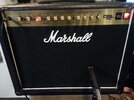
Now I know this is a band/rehearsal environment, but note where my amp is located, just beneath my left elbow. It's on a stand and facing upward to keep it from shooting out a 'beam' of sound.
This allows me to hear the amp and use it like a monitor and it tends to "fill the room" and have a more balanced sound with the other instruments. . If the amp is on the floor - the sound just roars right past you and you can barely hear it.

There has to be a term for this..."Invisible Train???"

Who else has been standing next to an amp at 3/4 volume and could *barely* hear it, but the soundman was giving you the thumbs up and 'OK' signals????

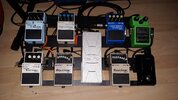
My pedalboard is on all the time, so I never have to switch things on and off, so many times, I will put it behind me.

1574268835156.png

Amp volume is always at 1/2 all the time. All volume control is with the Boss FV30L through the FX loop. This arrangement allows me to turn the amp down and never lose the gain and presence...much like an attentuator.

20190117_212339.jpg

You really should try a volume pedal in the FX loop. No matter how far you turn the amp down, gain and presence remains the same....

Rob Pedalboard.jpg
 
really been thinking about this

the answer lies in setting up your amp at volume required or that you can use at home. Set amp good first before adding pedals. get a good base tone of clean-crunch & lead.
Figure that all out before adding. Then the amp is in the zone required on its own. Whether it is for loud or quiet use, get a consistent level across the board.Then start to dial in as needed with the pedals. use the amp's natural strengths to their advantage...then pedal up to customize that base tone. Some of my fav gigs is when i go marshall & no pedals & just ride the guitar knobs.
 
really been thinking about this

the answer lies in setting up your amp at volume required or that you can use at home. Set amp good first before adding pedals. get a good base tone of clean-crunch & lead.
Figure that all out before adding. Then the amp is in the zone required on its own. Whether it is for loud or quiet use, get a consistent level across the board.Then start to dial in as needed with the pedals. use the amp's natural strengths to their advantage...then pedal up to customize that base tone. Some of my fav gigs is when i go marshall & no pedals & just ride the guitar knobs.

@RVA - I actually think an volume pedal in the loop trumps the attenuator!
 
Back
Top