
You are using an out of date browser. It may not display this or other websites correctly.
You should upgrade or use an alternative browser.
You should upgrade or use an alternative browser.
AMP SAFETY - Please read!
- Thread starter RVA
- Start date
-
- Tags
- amp safety
OP

RVA
Ambassador
Thanks to Sysco, here is a design for a capacitor discharge device:
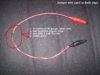
One end is clipped to ground (anywhere on the chassis). The other end is clipped to pin 1 of V1. The whole circuit drains smoothly like this. Unless your are discharging a cap individually, you don't really need a power resistor in the jumper wire with this method. If pin 1 for some reason is a little tricky to get to, maybe by following the lead to its plate resistor, you can clip it right where the lead joins the resistor...:
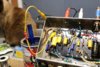
One end is clipped to ground (anywhere on the chassis). The other end is clipped to pin 1 of V1. The whole circuit drains smoothly like this. Unless your are discharging a cap individually, you don't really need a power resistor in the jumper wire with this method. If pin 1 for some reason is a little tricky to get to, maybe by following the lead to its plate resistor, you can clip it right where the lead joins the resistor...:
Last edited:
OP
RVA
Ambassador
Here are some great tips from Aiken Amplification
Rules to live by:
Rules to live by:
- Never work on an amp while talking to someone, either in person, or on the telephone. I have gotten more severe shocks by accidentally touching things while someone was standing there watching me, asking questions. Never work while distracted!
- When probing a live amp, keep one hand in your pocket - it's the current across the heart by way of the arms that kills you.
- Never wear jewelry of any kind on your hands or wrists - gold and silver are highly conductive, and it's a good excuse to use when your wife catches you without your wedding ring on.
- Always unplug an amp before going in to solder something - don't depend on the power switches.
- Don't chew on a length of solder while contemplating your next move - ingesting lead kills brain cells....
- ...what were we talking about? Oh, yes, now I remember....
- Use a variac to bring up an amp after mods or on new builds - carefully monitor the current and shut it down if it rises quickly at low voltages. Alternately, make a fixture with a light bulb in a socket that is in series with one side of the AC line - if the amp has a major short, the light bulb will light up instead of blowing the fuse or vaporizing your new power transformer.
- A $150 transformer will blow every time to protect a 50 cent fuse - be sure to use a fuse of the correct rating and type! This usually means slo-blo in the mains, and a fast blow in the HT line, rated for no more than 150% of the max current draw at full power.
- Wear safety glasses while working on amps. If you've never seen what happens when you wire in a large (or even small) electrolytic capacitor backwards, or exceed it's working voltage, you're in for the scare of your life! Hint: smoke, tar, and chicken feathers, following rapid explosive decompression and a launched projectile the size of a largish shell casing. If you get hit in the face with this exploding mixture, not only will you look like Daffy Duck with his beak blown off, you may sustain serious eye damage. I once had a very large electrolyic go off in my face, leaving me with a cut on my nose from the can, a melted contact lens from a piece of hot metal, and the aforementioned Daffy Duck look. I was able to laugh at myself only after realizing I wasn't permanently blinded in one eye.
- Never work on amps around small children - you will be embarrassed when they pick up the language you use when you touch live wires.
- When clipping wires or component leads with diagonal pliers, point them away from you - the cut leads fly off with incredible velocities, and can easily damage your eyes - again, use safety glasses!
- Electrolytic (and other type) filter capacitors can hold lethal charges - be sure to discharge them before working on an amplifier. This can be done by shorting the "+" side to the "-" side, or the "+" side to the chassis (unless the cap is in a negative voltage supply, like the bias supply, where you must short the "-" side to the chassis), using a wire or a screwdriver. This will make a big spark and a loud noise, which is sure to impress any onlookers. If you'd rather do it more discreetly, make a jumper cable consisting of alligator clips on the ends, with a resistor in series in the middle of the jumper. Use a value of somewhere between 10K and 100K, with a power rating of 5W or so (a high power rating is not really necessary for dissipation reasons, but mainly because the higher power resistors are physically more robust and won't tend to break). Be sure to adequately insulate the resistor with heat-shrink tubing so the wires aren't exposed, or you'll get shocked while trying to discharge the capacitors. The larger the value of the resistor, the longer it will take to discharge the caps, and the less of a spark you will see. If you use a large value resistor, be sure to leave it in place long enough for it to drain all the charge out of the capacitor (if in doubt, measure the voltage across the capacitor to make sure it is close to zero). Note that many amplifiers will incorporate "bleeder" resistors, which will drain the capacitor charge automatically in a few minutes after the amp is turned off. Don't depend on this resistor to do it's job!
- Be sure to turn the power off to the amplifier before discharging the electrolytic filter capacitors, or you will get an unpleasant surprise.
- Be sure to remove any capacitor-discharging jumper wires before re-powering up the amp, or you will get another unpleasant surprise.
- Get your wife/friend/co-worker/etc. to take a CPR course. Don't argue if they ask you to pay for it.
- Tubes get hot, it's their job, especially power tubes. Don't touch them.
- Don't install tubes with the power on - if the glass breaks, you can come in contact with high voltages. A shock after a nasty cut just adds insult to injury.
- Buss wire looks exactly like solder, but doesn't melt worth a damn.
- Never solder in your underwear (don't ask!). Seriously, short pants and soldering don't mix very well. Wear appropriate clothing.
- Learn from other's mistakes - it's cheaper and far less painful.

BFT Gibson
Ambassador of Originality

would love to learn & build..decided...have 2 fantastic tech/builder friends...they are the best. I do basics..would really enjoy building a Super reverb on 1 side & hot jtm45 on other tho..in super cab. Better stick to making car keys..
side note..My dad was C&S for PRR/Amtrak..they did the high tension lines for the electric trains. 1 guy touched a metal piece on a bridge & grounded his self out. Dad said it smoked him up like a piece of chicken, The hands clinched by the shock & he burned alive inside out..on the Rt100 bridge,,,nothing to play with..
side note..My dad was C&S for PRR/Amtrak..they did the high tension lines for the electric trains. 1 guy touched a metal piece on a bridge & grounded his self out. Dad said it smoked him up like a piece of chicken, The hands clinched by the shock & he burned alive inside out..on the Rt100 bridge,,,nothing to play with..


chilipeppermaniac
Ambassador of Decibels
Yup to all and RVA. I posted the first 2 clips numerous times on here and elsewhere. That list from Aiken is new to me, Thanks Ray
Also, I may add one other caveat. As I am new( ish) to amp repairs and rely on a few of our experts in here. DonP, BastardDON, IvanH, I review my understanding of the things they explain to me BEFORE I do anything inside my amp. I tell them how I "hear" their explanations, then wait to have them confirm what my brain understood them to say is accurate. Only when we are all on the same page, do I proceed.
1st and foremost rule of safety should be to do NOTHING inside an amp you are not 100% sure you will be 100% safe from causing electrocution to yourself. If this is followed, the most valuable component of any amp will never be fried and that is the USER/SERVICER
Also, I may add one other caveat. As I am new( ish) to amp repairs and rely on a few of our experts in here. DonP, BastardDON, IvanH, I review my understanding of the things they explain to me BEFORE I do anything inside my amp. I tell them how I "hear" their explanations, then wait to have them confirm what my brain understood them to say is accurate. Only when we are all on the same page, do I proceed.
1st and foremost rule of safety should be to do NOTHING inside an amp you are not 100% sure you will be 100% safe from causing electrocution to yourself. If this is followed, the most valuable component of any amp will never be fried and that is the USER/SERVICER
Last edited:

chilipeppermaniac
Ambassador of Decibels
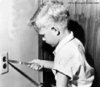
Was that early NYC MOB initiation training? Vox


eSGEe
Ferengi Ambassador of Trade
Hang tough --- your on the East Coast--- you also know what your doingNow back to the hurricane I gots to deal with
 but if I can help let me know!!!
eSGEe
Ferengi Ambassador of Trade
I have an actual question--- how safe is just "swapping" tubes? Can you get BAZZAPed swapping the tubes???
I HATE soldering
I dont know nuttin about wiring (insides of amps are more confusing to me than trying to explain why a WOMAN does what she does!)
the only thing I WILL do is change tubes ----and on a RARE occasion a speaker --- otherwise ---- I beg Drummiod -- or Hack to "HELP--ive broke it" again.....
this also keeps me from getting frustrated and using my favorite tool
I HATE soldering
I dont know nuttin about wiring (insides of amps are more confusing to me than trying to explain why a WOMAN does what she does!)
the only thing I WILL do is change tubes ----and on a RARE occasion a speaker --- otherwise ---- I beg Drummiod -- or Hack to "HELP--ive broke it" again.....
this also keeps me from getting frustrated and using my favorite tool

OP
RVA
Ambassador
Not in and of itself, if the power is off. The real danger is getting near the filter/electrolylic capacitors regardless of what you are doing. They store charge. They generally look like this.I have an actual question--- how safe is just "swapping" tubes? Can you get BAZZAPed swapping the tubes???
I HATE soldering
I dont know nuttin about wiring (insides of amps are more confusing to me than trying to explain why a WOMAN does what she does!)
the only thing I WILL do is change tubes ----and on a RARE occasion a speaker --- otherwise ---- I beg Drummiod -- or Hack to "HELP--ive broke it" again.....
this also keeps me from getting frustrated and using my favorite tool
View attachment 30616
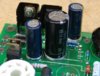
Or maybe like this
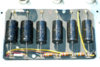
Read above for a full list of dangers
Last edited:


Sp8ctre
Ambassador of Steel
Super reverb on 1 side & hot jtm45 on other
I have an amp like this. It's called a Silkyn and they were designed by Mike Saldano. A screw up in the transformer being made in China rendered the entire lot useless.
A bunch of us on here bought them and then sourced new transformers from Onetics. Mine has been installed and the amp works flawlessly now!
eSGEe
Ferengi Ambassador of Trade
yep--- that looks like the stuff I AVOID ....and take to Drummoid ....so he can get zappedNot in and of itself, if the power is off. The real danger is getting near the filter/electrolylic capacitors regardless of what you are doing. They store charge. They generally look like this.
View attachment 30622
Or maybe like this
View attachment 30623
Read above for a full list of dangers

Last edited by a moderator: