SG John
Ambassador of Cool Guitars and Amps.

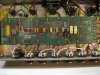
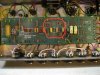
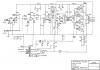
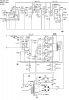
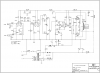
I copied the bottom section from the messages going around when Chilli got his Marshall Lead Bass head. I tried several 12ax7 tubes in V3, and the best I could get was 5 volts difference. Most were 15-20 volts off, varying from 190 volts to 230 volts. Except one, where pin 1 only had 58 volts (most likely nfg).
With my 50 watt Master volume JMP, does the 7.2 volts still hold true? Is 5 volts good enough, or should I check every last 12ax7 I have to make sure I can't get closer (I probably will anyway)?
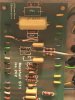
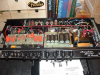
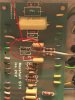
I need to dig up a good layout chart of the ST1 printed circuit board to figure out which resiters I should be checking next.
Thanks,
Hi Chilli, the PI tube is the Phase Inverter tube (aka Phase Splitter, aka power amp driver tube). To explain what it actually does, it supplies one half of the power amp with a signal & the other half of the power amp with a signal that is 180 degrees out of phase. Actually, the first half of the phase splitter, the triode feeding V4 & V5, is the inverting triode, the triode feeding V6 & V7 is the non inverting triode.
Now, to expand on what Plexi said (& our man Plexi does know how to tune an amp). The type of phase inverter used in marshalls is know as a "long tail pair" (usually written as LTP). This design has an inherent imperfection in that there is an output imbalance of the two triodes, where the first triode (feeding V4 & V5) drives the tubes harder (more output) than the second triode does. To try to counter this the first triode has an 82k plate load resistor while the second triode has a 100k plate load resistor.
To get the best performance (symmetrical drive) from this phase inverter you want a differential voltage between the PI plates of about 7.2 volts, or there abouts. We'll get back to ways to accomplish this, but to check for this differential voltage;-
Amp chassis out of head box & upside down, speaker load connected to output, both volumes on zero, switched on & let stabilise for 10 minutes. Ok, if you read the DC voltage to ground on pin 1 of the PI (V3), you might see, say, 230VDC. Now if we read the voltage on pin 6 it should be a few volts (ideally around 7V) less than the 230V that is on pin 1. To "accurately" check this differential voltage you put the red lead of your meter on pin 1 & the black lead of your meter on pin 6, with the meter switched to the 20VDC range. A 7.2VDC reading would be the "magic" number.
Ok, to further confound the problem of imbalance in the LTP PI, most 12AX7's also have imbalanced triodes. To explain how this can affect things, when I recently rebuilt my 4 hole 50 Watter with NOS components & NOS valves I had two NOS Brimar CV4004 12AX7's to try in the PI position. One had "almost" (within 2%) perfectly matched triodes, the other not so much. Trying the "matched" valve in V3 gave a differential voltage of almost 11VDC. The "unmatched" valve however gave a differential voltage of, IIRC, 7.8VDC. Not perfect but still ballpark.
So we can used the mismatch between triodes of 12AX7's to our advantage in achieving this 7 ish volt differential between PI plates. Simply plug a few different ones in, taking voltages of each looking for the one that gets us closest to ideal.
Then we have the much more appropriate "Dumble" approach, where a trimpot is added between the PI's HT+ supply & the two PI plate load Resistors (82k & 100k). To accomplish this, the ends of the two resistors need to be lifted from the HT+ supply. The middle, adjustable terminal of a (quality) trimpot is then attached to the HT+ supply. The free ends of the 82k & 100k resistors are then attached to either side of the trimpot (one to each side). This does slightly increase the value of load resistances but the effect is negligible. What doing this does is allow adjustment of the plate load resistances. By turning the trimpot we can increase the value of one resistance while decreasing the other, & vice versa. This allows the desired differential voltage to be dialled in. Without checking, I'm not sure of the value of the trimpot Dumble uses, but imagine that 10k would suffice, or 20k, maybe. If you are contemplating this, use a quality trimpot, like the Piher type used as bias voltage adjustment trimmers.
And what does this magic 7.2VDC differential voltage achieve??? Smooth, rich, singing sustain. Any amp "tuner" worth his salt will, after first insuring that all HT+ nodes show correct voltages, then tune the Phase Inverter. The power section can at best only perform as well as the PI drives it.
It is not uncommon for V4 & V5 of Marshall 100 Watters to redplate when being driven, due to the imbalance in the LTP phase inverter.
There is one more approach to achieving symmetrical drive from the PI that I'll mention, & that is to lower the value of the 1 Meg ohm grid reference resistor on the input side of the phase inverter, as was done on some Park amps. These use a value of 390k instead of 1 Meg. It is known as the "Steve Grindrod" PI mod if you want to look for info on.
Hope this all helps. Cheers
With my 50 watt Master volume JMP, does the 7.2 volts still hold true? Is 5 volts good enough, or should I check every last 12ax7 I have to make sure I can't get closer (I probably will anyway)?
I need to dig up a good layout chart of the ST1 printed circuit board to figure out which resiters I should be checking next.
Thanks,
Hi Chilli, the PI tube is the Phase Inverter tube (aka Phase Splitter, aka power amp driver tube). To explain what it actually does, it supplies one half of the power amp with a signal & the other half of the power amp with a signal that is 180 degrees out of phase. Actually, the first half of the phase splitter, the triode feeding V4 & V5, is the inverting triode, the triode feeding V6 & V7 is the non inverting triode.
Now, to expand on what Plexi said (& our man Plexi does know how to tune an amp). The type of phase inverter used in marshalls is know as a "long tail pair" (usually written as LTP). This design has an inherent imperfection in that there is an output imbalance of the two triodes, where the first triode (feeding V4 & V5) drives the tubes harder (more output) than the second triode does. To try to counter this the first triode has an 82k plate load resistor while the second triode has a 100k plate load resistor.
To get the best performance (symmetrical drive) from this phase inverter you want a differential voltage between the PI plates of about 7.2 volts, or there abouts. We'll get back to ways to accomplish this, but to check for this differential voltage;-
Amp chassis out of head box & upside down, speaker load connected to output, both volumes on zero, switched on & let stabilise for 10 minutes. Ok, if you read the DC voltage to ground on pin 1 of the PI (V3), you might see, say, 230VDC. Now if we read the voltage on pin 6 it should be a few volts (ideally around 7V) less than the 230V that is on pin 1. To "accurately" check this differential voltage you put the red lead of your meter on pin 1 & the black lead of your meter on pin 6, with the meter switched to the 20VDC range. A 7.2VDC reading would be the "magic" number.
Ok, to further confound the problem of imbalance in the LTP PI, most 12AX7's also have imbalanced triodes. To explain how this can affect things, when I recently rebuilt my 4 hole 50 Watter with NOS components & NOS valves I had two NOS Brimar CV4004 12AX7's to try in the PI position. One had "almost" (within 2%) perfectly matched triodes, the other not so much. Trying the "matched" valve in V3 gave a differential voltage of almost 11VDC. The "unmatched" valve however gave a differential voltage of, IIRC, 7.8VDC. Not perfect but still ballpark.
So we can used the mismatch between triodes of 12AX7's to our advantage in achieving this 7 ish volt differential between PI plates. Simply plug a few different ones in, taking voltages of each looking for the one that gets us closest to ideal.
Then we have the much more appropriate "Dumble" approach, where a trimpot is added between the PI's HT+ supply & the two PI plate load Resistors (82k & 100k). To accomplish this, the ends of the two resistors need to be lifted from the HT+ supply. The middle, adjustable terminal of a (quality) trimpot is then attached to the HT+ supply. The free ends of the 82k & 100k resistors are then attached to either side of the trimpot (one to each side). This does slightly increase the value of load resistances but the effect is negligible. What doing this does is allow adjustment of the plate load resistances. By turning the trimpot we can increase the value of one resistance while decreasing the other, & vice versa. This allows the desired differential voltage to be dialled in. Without checking, I'm not sure of the value of the trimpot Dumble uses, but imagine that 10k would suffice, or 20k, maybe. If you are contemplating this, use a quality trimpot, like the Piher type used as bias voltage adjustment trimmers.
And what does this magic 7.2VDC differential voltage achieve??? Smooth, rich, singing sustain. Any amp "tuner" worth his salt will, after first insuring that all HT+ nodes show correct voltages, then tune the Phase Inverter. The power section can at best only perform as well as the PI drives it.
It is not uncommon for V4 & V5 of Marshall 100 Watters to redplate when being driven, due to the imbalance in the LTP phase inverter.
There is one more approach to achieving symmetrical drive from the PI that I'll mention, & that is to lower the value of the 1 Meg ohm grid reference resistor on the input side of the phase inverter, as was done on some Park amps. These use a value of 390k instead of 1 Meg. It is known as the "Steve Grindrod" PI mod if you want to look for info on.
Hope this all helps. Cheers
Last edited: