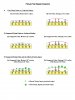
Interesting Article On Pickup Adjustment:

Hmmmm...Gibson's Ted Drozdowski said this in a Gibson technical article:

If you’re not pleased with the way your humbucker-equipped guitar sounds — not enough brightness on the high-tuned strings, muddy lows, or other issues — a simple pickup adjustment, rather than a costly pickup replacement, may be the solution.

The height of your guitar’s humbucking pickups effects how it sounds in two ways — overall tone and note-to-note clarity. Generally speaking, the closer the pickups are to the strings, the hotter the output. While “hot output” sounds cool on paper, it can create distortion and complicate sculpting tones. And the height of each screw in your humbuckers’ faceplates corresponds to each string and can color the overall tone and output of each string in a similar fashion.

Here are five things you should keep in mind when adjusting the height of humbuckers:

• Gather your tools: You’ll need a screwdriver — an appropriately sized Phillips head or flat head, depending on the kind of screws that hold your pickups in their mounts or are on their faceplates — a note pad, a capo, a ruler that measures millimeters and a pen or pencil. Begin by pressing the strings down on the highest fret – that’s where the capo comes in – measuring the distance between the strings and the pickups on each side of the pickups. Write those results down on the pad. If your adjustment doesn’t improve your guitar’s tone, you may want to return to this original pickup height. If you want to be super-precise, there’s a special measuring device available called a string action gauge. They cost between $5 and $20.

• Get hot or cool: Raise the pickups for a hotter signal. Lower the pickup for a less hot signal. The closer a string’s proximity to a pickup, the more its vibrations are magnified as they feed into your signal chain. Remember, the original Seth Lover-designed PAF humbuckers that created so many of the great guitar tones heard on classic albums were low output. So while new-generation, high-output pickups might seem appealing, they actually hinder producing vintage tones.

• Know the specs: Having a reference point helps. Gibson’s engineers recommend a 1.6-millimeter distance between the strings and the pickups for the bridge pickup, and 2.4 millimeters for the neck pickup. In the 1950s, it was 1.6-millimeters for both pickups, which may have reflected the lower-output, unpotted standard of the day. However, if your guitar sounds too muddy, add some distance on the bass side. If it’s too bright, do the same on the treble. And adjust to your own sonic desires.

• Tweak pole pieces: After adjusting a humbucker’s height you should examine the height of its individual pole pieces or screws to make sure they follow the radius curve of the fretboard. And if there’s still a string that sounds too loudly or quietly, adjust the individual piece or screw down or up accordingly.

• Listen up: There’s no hard and fast rule for where a pickup should be placed. If it sounds right to you, it’s right. That simple, So spend some time listening to the tones of your favorite guitar players and envision the sound you’d like your guitar to produce when you play it. The, the chase is on, and it’s more than likely going to be a lifelong pursuit. Pickups height is just one small part of the hunt.
 
Very Interesting!

By dropping the 'g' pole piece, I took a harshness out of that string....a kind of jangle...which I think was magnetic field pull.

Using a VU meter now for fine adjustments.
 
Last edited:
Interesting is right.
The open D chord and D power chord and D5 , E5 A string root with / without octave are my benchmarks for dialing in a crunch / not a lot of gain / Bon era AC/DC kind of thing / 70's classic rock crunch neighborhood.
I spend a lot of time in that neighborhood.

The G string sound really shapes that type of tone on those chords.

I will have a go at the G-pole with the muse I adorn later this evening.
 
Interesting is right.
The open D chord and D power chord and D5 , E5 A string root with / without octave are my benchmarks for dialing in a crunch / not a lot of gain / Bon era AC/DC kind of thing / 70's classic rock crunch neighborhood.
I spend a lot of time in that neighborhood.

The G string sound really shapes that type of tone on those chords.

I will have a go at the G-pole with the muse I adorn later this evening.

Excellent!!!! You Understand!!!

I spend my time in F# palm mutes...
 
Interesting is right.
The open D chord and D power chord and D5 , E5 A string root with / without octave are my benchmarks for dialing in a crunch / not a lot of gain / Bon era AC/DC kind of thing / 70's classic rock crunch neighborhood.
I spend a lot of time in that neighborhood.

The G string sound really shapes that type of tone on those chords.

I will have a go at the G-pole with the muse I adorn later this evening.

I see exactly what the author means...

using my stock Epiphone pickups (with gold covers) I had an almost overly-bright, harsh quality on the G string. That went away when I dropped the pole...
 
I had a cheap Dragonfire strat set with vintage poles - the g was higher based on the old wound g.
the neck was honky and lowering the pickup helped but it / they never sounded any good.

This thread got me thinking and I learned something significant that adds to my knowledge base.
Thanks @Robert Herndon

i didnt mess with poles tonight I just jammed on the 6g2 with P90's that sound good as is.
 
I had a cheap Dragonfire strat set with vintage poles - the g was higher based on the old wound g.
the neck was honky and lowering the pickup helped but it / they never sounded any good.

This thread got me thinking and I learned something significant that adds to my knowledge base.
Thanks @Robert Herndon

i didnt mess with poles tonight I just jammed on the 6g2 with P90's that sound good as is.

Awesome!!!!

i am always looking to add those subtle nuances...
 
Hmmm....on a humbucker with adjustment screws on both coils....set both rows of screws to the string radius????
 
Interesting is right.
The open D chord and D power chord and D5 , E5 A string root with / without octave are my benchmarks for dialing in a crunch / not a lot of gain / Bon era AC/DC kind of thing / 70's classic rock crunch neighborhood.
I spend a lot of time in that neighborhood.

The G string sound really shapes that type of tone on those chords.

I will have a go at the G-pole with the muse I adorn later this evening.

Updates?
 
Pickup+Pole-Piece+heightadjustment.png
 
I lowered the G a bit - the very top of the screw slot is about even with the top surface of the cover; the screw looks visibly below the cover at first glance.
First impression very good; seemed to balance better overall.

Only tried on a Guitarmadness 57 Special bridge pu / supposed to be similar to gibson 57 classic. Not sure if + or not.
 
Back
Top