Treble, gain and feedback

RVA

Ambassador
Today I learned that treble should be reuced at high gains to avoid squeeling feedback. I am not sure how I never heard anything about this before tonight, but that is how it is.

It seems to be so obvious to the masses that I cannot find anything written on it other than casual references or a line or 2 to newbies as advice on how to tame their first tube amp.

I learned just in the nick of time. I almost changed ny entire tube set to see if that fixed it!

Can nyone educate me further please?
 
Today I learned that treble should be reuced at high gains to avoid squeeling feedback. I am not sure how I never heard anything about this before tonight, but that is how it is.

It seems to be so obvious to the masses that I cannot find anything written on it other than casual references or a line or 2 to newbies witht heir first tube amp.

I learned just in the nick of time. I almost changed ny entire tube set to see if that fixed it!

Can nyone educate me further please?


Hmmm...I would say that some amps (and guitars) seem more prone to feedback than others. My treble settings are always 12 Noon....Not sure I can give you anything to support that notion....???
 
Hmmm...I would say that some amps (and guitars) seem more prone to feedback than others. My treble settings are always 12 Noon....Not sure I can give you anything to support that notion....???
It may have to do with the natural EQ of the amp and other circuitry. My JVM squeals with pedals, even on the clean channel. Treble reduction completely solves the issue.
 
It may have to do with the natural EQ of the amp and other circuitry. My JVM squeals with pedals, even on the clean channel. Treble reduction completely solves the issue.

Really??? I have a JVM410C. It's been up at Mom's for years. Over the years. it's been used it with all kinds of effects, super high volumes, but never encountered anything like that. I'm puzzled!!!!
 
Feedback happens when the string vibration caused by the sound from the speakers is bigger than the original vibration that made the sound in the first place. It just goes on getting bigger in an endless cycle. The size of the vibration depends on the overall gain round the loop at that frequency. If you use treble boost, you add more gain at those higher frequencies, and if a string (or a pickup winding) happens to have a resonant response somewhere in that band, it will feed back. You fix the feedback by reducing the gain around the loop. You can back off the treble control or walk away from the speaker. Either will do the job.
 
Thank you for the explanation Don. I was playing (unecessarily) loud indoors, so there was not much distance available to me on that floor. 20 feet did not make a dent with the volume at 4 on this 50W. Since I am wireless, I will head upstairs and across the house next time and see what happens
 
Really??? I have a JVM410C. It's been up at Mom's for years. Over the years. it's been used it with all kinds of effects, super high volumes, but never encountered anything like that. I'm puzzled!!!!
I am envious. The JVM410 is a complete beast.

I am tring to evaluate the differences between our situations based on what Don explained. Do you have more than 20 feet of distance? Barriers?
 
Thank you for the explanation Don. I was playing (unecessarily) loud indoors, so there was not much distance available to me on that floor. 20 feet did not make a dent with the volume at 4 on this 50W. Since I am wireless, I will head upstairs and across the house next time and see what happens

In a small-ish enclosed space like that it’s kind of hard to put enough distance between you and the amp, due to the sound reflecting off all the surfaces. It’s easier to do outdoors.
 
  • Like
Reactions: RVA
In a small-ish enclosed space like that it’s kind of hard to put enough distance between you and the amp, due to the sound reflecting off all the surfaces. It’s easier to do outdoors.
Makes sense. This does not happen at similar volumes with other amps and the same pedals, so consider this a "con" in response to that previously steller review I gave the JVM in the other thread.
 
Makes sense. This does not happen at similar volumes with other amps and the same pedals, so consider this a "con" in response to that previously steller review I gave the JVM in the other thread.

I don’t consider it a “con” on the amp. In an enclosed environment it’s harder to control feedback. The frequencies that are reflected is also a function of the room acoustics. In another room you may find the feedback to be somewhat less problematic because the offending frequencies may be more absorbed and less reflected.

Also, to extrapolate from what DonP pointed out, the frequency that is feeding back is a function of the resonant frequency of the strings and/or pickup winding. It’s not just the amp.

Also, if you are facing the amp with your guitar, it’s easier to get the feedback. Facing away from the amp with a barrier (your body!) between the amp and the guitar can help minimize it, though if the acoustics are such that there are a lot of reflections, even that may not be completely effective.

For me, I play with the amp feeding a speaker cabinet enclosed in an isolation cabinet. This allows the best of both worlds: I can run my amp at a level to get good sound, but not have to worry about feedback issues and uncontrollable stage volume.
 
I don’t consider it a “con” on the amp. In an enclosed environment it’s harder to control feedback. The frequencies that are reflected is also a function of the room acoustics. In another room you may find the feedback to be somewhat less problematic because the offending frequencies may be more absorbed and less reflected.

Also, to extrapolate from what DonP pointed out, the frequency that is feeding back is a function of the resonant frequency of the strings and/or pickup winding. It’s not just the amp.

Also, if you are facing the amp with your guitar, it’s easier to get the feedback. Facing away from the amp with a barrier (your body!) between the amp and the guitar can help minimize it, though if the acoustics are such that there are a lot of reflections, even that may not be completely effective.

For me, I play with the amp feeding a speaker cabinet enclosed in an isolation cabinet. This allows the best of both worlds: I can run my amp at a level to get good sound, but not have to worry about feedback issues and uncontrollable stage volume.
I tried 2 different guitars and went into the other room in the basement is that I was behind a wall. Neither of these things had an impact. I will continue to experiment
 
My mesa Rectoverb manual agrees with your findings Ray...

NOTE: When using PUSHED with the GAIN Control maxed (5:00), avoid setting the TREBLE Control higher than (2:30). Settings above (2:30) may generate microphonic oscillation in certain preamp tubes in the V1 position. This can be avoided altogether by setting the TREBLE Control sensibly when the GAIN Control is maxed. Use the PRESENCE Control for additional brightness.
 
I am envious. The JVM410 is a complete beast.

I am tring to evaluate the differences between our situations based on what Don explained. Do you have more than 20 feet of distance? Barriers?

Don's response makes sense. I noticed that I have virtually zero tendency to feedback with a covered pickup. Distances are tight in Mom's studio - less than 20 feet in terms of amp placement in general. We never used a drum screen or plexiglass, like Bonamassa. Volumes were often in the '3' to '4' dial position with gain around 1/2...
 
I don’t consider it a “con” on the amp. In an enclosed environment it’s harder to control feedback. The frequencies that are reflected is also a function of the room acoustics. In another room you may find the feedback to be somewhat less problematic because the offending frequencies may be more absorbed and less reflected.

Also, to extrapolate from what DonP pointed out, the frequency that is feeding back is a function of the resonant frequency of the strings and/or pickup winding. It’s not just the amp.

Also, if you are facing the amp with your guitar, it’s easier to get the feedback. Facing away from the amp with a barrier (your body!) between the amp and the guitar can help minimize it, though if the acoustics are such that there are a lot of reflections, even that may not be completely effective.

For me, I play with the amp feeding a speaker cabinet enclosed in an isolation cabinet. This allows the best of both worlds: I can run my amp at a level to get good sound, but not have to worry about feedback issues and uncontrollable stage volume.

Now my DSL40C is intetesting. My music room is hardwood with only a sofa. Yesterday morning, I had an empty house and I was doing some rehearsal work at '4' on the volume knob - that's incredibly loud on the 40 watt full power setting - and I was 15 feet from the amp.

There was very little feedback tendency and then only when I let go of the strings.

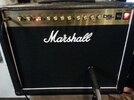
Here's where I was running it at rehearsal Thursday night...less that 6 feet away and easily managed:

IMG_20190117_40621.jpg

Note the 'sweet-spot' positioning of SM-57... :-)
 
Last edited:
My mesa Rectoverb manual agrees with your findings Ray...

NOTE: When using PUSHED with the GAIN Control maxed (5:00), avoid setting the TREBLE Control higher than (2:30). Settings above (2:30) may generate microphonic oscillation in certain preamp tubes in the V1 position. This can be avoided altogether by setting the TREBLE Control sensibly when the GAIN Control is maxed. Use the PRESENCE Control for additional brightness.

Hmmmm....there's a thought! Maybe swap V1?
 
Don's response makes sense. I noticed that I have virtually zero tendency to feedback with a covered pickup. Distances are tight in Mom's studio - less than 20 feet in terms of amp placement in general. We never used a drum screen or plexiglass, like Bonamassa. Volumes were often in the '3' to '4' dial position with gain around 1/2...
Well hell here a along I thought the drum screens are used to protect the drummer from flying beer bottles....:p
 
I can confirm that a slightly michrophonic tube can contribute to the behavior RVA describes.
A Peavey Classic 30 that was dropped with me for repair (and never picked up) was cured by replacing a preamp tube(I think it was V3) that didn’t pass the chopstick test at volume with distortion. It behaved pretty well when run clean though. Now it’s fine.
 
Well hell here a along I thought the drum screens are used to protect the drummer from flying beer bottles....:p

In the country western bars of the San Joaquin Valley - Tulare County specifically - where I grew up, the bandstand was surrounded with chicken wire to keep the bottles from hitting the band...


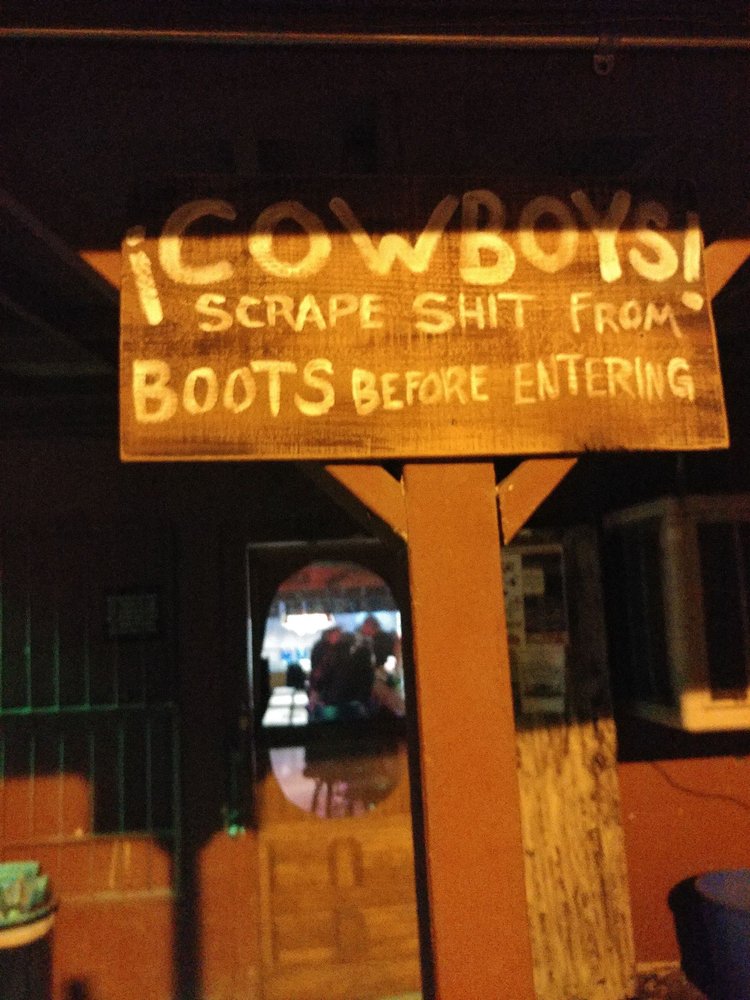
This sign is in The Dead Rat Saloon in Redbanks, California...
o.jpg
 
I can confirm that a slightly michrophonic tube can contribute to the behavior RVA describes.
A Peavey Classic 30 that was dropped with me for repair (and never picked up) was cured by replacing a preamp tube(I think it was V3) that didn’t pass the chopstick test at volume with distortion. It behaved pretty well when run clean though. Now it’s fine.

+1 for Chopstick Test!
 
Back
Top